
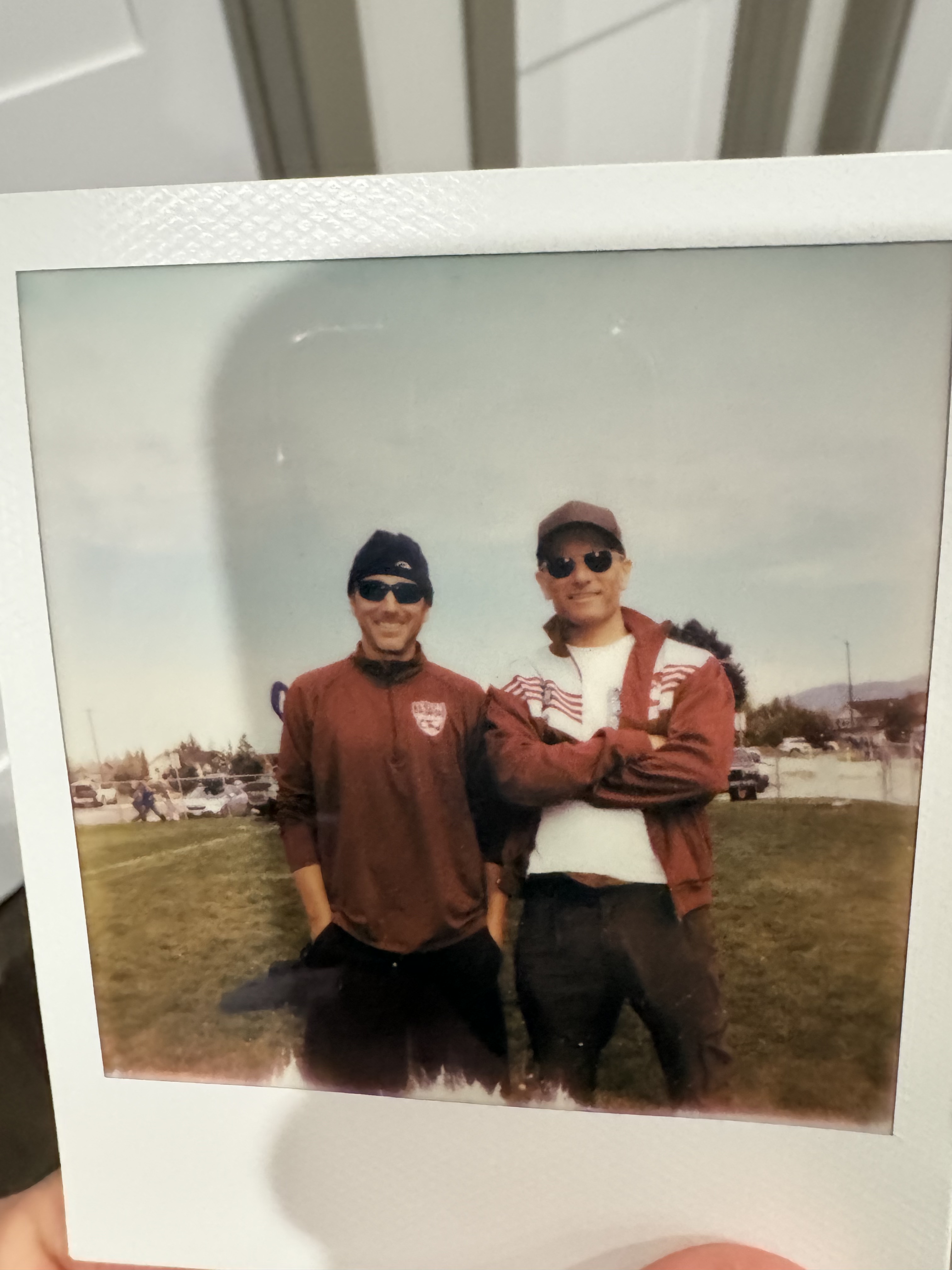
It’s official, fall is over, the fields are disappearing under a blanket of fresh snow as we speak, and I’m settling in for my annual winter break from standing on grass surrounded by boys wielding sticks or unleashing kicks. I start coaching lacrosse every spring, then spend summer shepherding my kids from tourney to tourney with some pick up practices with the local laxxers twice a week, followed by a fall where I double down and coach fall ball lax and soccer. It’s always a bittersweet time for me, the end of a season.
By the end of the last tournament, I’m washed. My knees hurt from all the scrimmaging I’ve joined and especially in the fall all the long balls I’ve kicked. My head is awash with wins and losses, not measured by actual victories as much as by how I was able to encourage and help develop my young athletes. My stomach is sour from all the road food, and hot dogs from tournament vendors, and victory ice creams, and energy drinks that I really need to cut back on. I’m tired. I’m ready for a break.
But at the same time I already miss it. The potential that every young athlete represents for greatness not just on the sports field but for the men they will become. I miss that feeling I get when a struggling kid finds an unexpected (for him) strength and endurance and the smile he has after scoring his first goal. I miss the kids smiling like goons as they discover, or rediscover, the unbridled joy inherent in sport. I miss the opportunities I get as a coach to help a player discover the results of hard work, or smart work; I miss that superpowered, anime-like blast of energy radiating off the athletes when they’ve persevered against a challenging opponent or come back from being down to emerge victorious. I could go on, but one good thing comes from this: the time to reflect.
One idea I started to grok on towards the end of this last season was the 2nd Law of Thermodynamics. Namely, that in a closed system, disorder gives way to disorder.
I grew up in “the old way” — static drills and repetition, moving towards perfection of skill and strategy. It was grounded in the idea that a team’s greatest pursuit is the pursuit of perfection. Some athletes have perfect games, sure. But I have yet to see a game, in any sport, ever, where everybody plays perfectly.
A few years ago, my lacrosse program adopted CLA, the “constraints-led-approach” that’s all the rage today. I was skeptical at first. I listened to all the podcasts and read the articles and the data but at times it felt like some sort of new-age voodoo, like athlete vegetarianism or trap rap. Trying it, though, led to a beautiful discovery: sports is chaos.
The beauty of sports is that we never know who will win. There is no perfect equation for success, and some of our favorite moments are inhuman feats combined with completely unexpected outcomes. No plan works perfectly when both sides are equal, and no player is perfect. Order will always devolve to disorder, entropy. This is where the greats shine, not only on the pitch or from X but also in life. If only 7% of all high school athletes play in college and even fewer play professionally, then what we’re really doing is preparing these athletes to become men and women. And off the field, life even at its best can often feel at least mildly chaotic. The ones who realize their true potential are the ones who can thrive in that chaos, and, eventually, bring a type of order to it. That’s the second part of the 2nd law I find just as fascinating.
Even in this disordered system, you can create pockets of order by applying energy. To continue the sports analogy, the effort put into developing those order-seeking skills, that structure and perfection, can result in the emergence from chaos, the retaking of destiny as all collapses around you. That’s where I was fortunate enough to coach soccer, for example, under a head coach who strove to balance the chaotic rules-based freeplay with some focused dribbling lines and wall-passing drills. That’s the nexus, it exists in that application of orderly energy at the right time after, before, and while thriving in the chaotic moments happening all around.
I think there’s a moral somewhere in there, something that extends beyond 10-to-12-year-olds running around arbitrary rectangles with made-up objectives and rules. Maybe the off-field lesson is simply that I’ve gotten into trap rap (though Wu-Tang is forever and Dre’s extended family will always reign in my heart). But as I get ready for snowboarding (a sport which, thankfully, I don’t coach), I’ll be thinking a lot on entropy and energy. And playing occasional all-ages pick-up in the middle school gym to keep my debilitating coaching addiction at bay.

 Ryan's Word Riots
Leave a comment