I’ve been fascinated with the concept of CANI for years. Constant And Neverending Improvement. Sure, it’s hackneyed and at times self-improvement can seem cultish. And when people start to become slaves to their self-improvement, especially as they cut out so many of the things that make humanity great, I see the concern. There are some things that make life worth living. “Wasting time” with friends, whether at the bar or the dinner party, that’s priceless. Cream sauce. A single glass of 18-year single malt from a Scottish isle. Binging “Breaking Bad.”
The key to life isn’t dropping our humanity; it’s becoming the best version of ourselves we can, without dropping our very humanity. Drive is good until it means we cast aside the people and activities that are central to our very DNA. But yes, we can always strive to be stronger, and smarter, and more patient and empathetic, and to make a greater contribution to our world in general and our families in the immediate. It’s tough to balance all of that, sure, but it makes life ever richer.
Right now I’m reading “Atomic Habits” and came across a line that has stuck with me, just like the memory of eating the mutton chop at Keens Steakhouse in Manhattan. It’s “We don’t rise to the level of our goals; we fall to the level of our systems.” From years of coaching lacrosse and soccer, and many more of playing, I’ve seen how those systems not only make you a better athlete, they carry through to your life.
The whole “I’m gonna work out starting on New Year’s” ends quickly. On the athletic side, I’ve already seen kids I’ve coached from 3rd grade to high school fall victim to their lack of systems. In 3rd grade they were one of the best players on the team. They played hard, with a natural skill and athleticism many others didn’t possess. And as things started to become difficult, as their “goal-scoring” slowed, as they were no longer as quick, they began to blame the world. In a more real sense they began to fall behind.
On the other hand, I have one lacrosse player who I’ve coached his whole career who started out way behind the curve. He was not the most skilled or the most athletic on the team; in fact nearly the opposite. It went that way for most of the things he liked to do. But he had that passion. And I explained to him that he could catch up but he had to stay committed.
Regular catching and throwing practice outside of the team practice. Lots of playing in the yards, but some of it was dribbling a soccer ball around cones, or picking up a ground ball and then cutting between cones. He improved to the point where he decided to try playing for a travel team. By then he was a solid player with great technique but not the biggest or the strongest. So he decided he would fix that too.
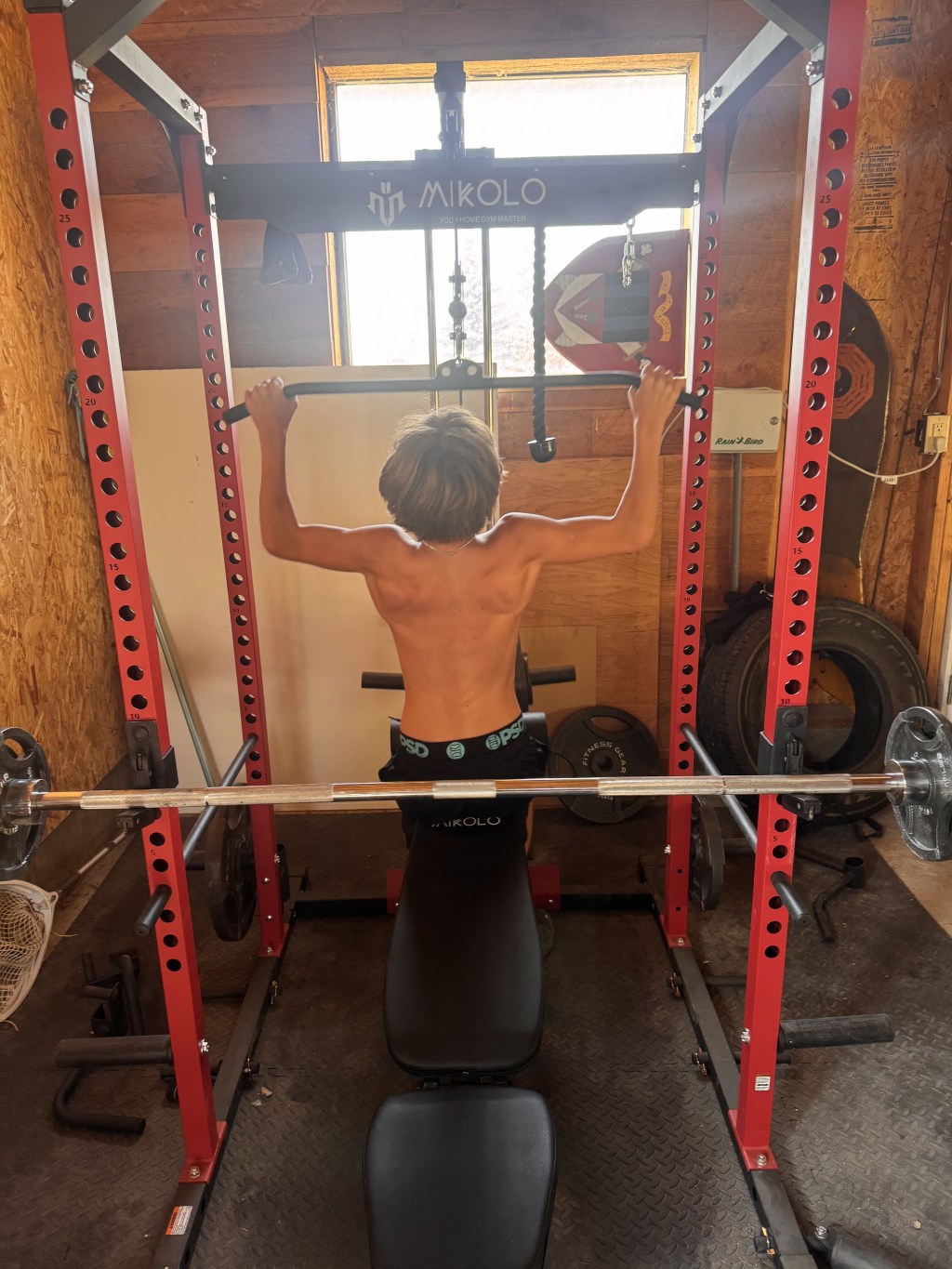
He started working out twice a week. Monday and Wednesday. Every week. When it wasn’t during the season, he would work on some facets of speed and technique for at least an hour on other days. It was a nonnegotiable. From jiu jitsu he learned about healthy eating and there were things like one Easter when I got him a bunch of candy in advance, he said he didn’t want sugar so the easter bunny had to shift gears.
The result is that in 5 years he went from one of the worst players on his team to one of the best. He keeps to his systems, though at times I have to jump in and remind him why he does them. That’s a parent’s job, and I think that also gets missed. As parents we want our kids to grow and be strong and disciplined on their own. It’s certainly a fine line between pushing and supporting, but the key I’ve found is asking your child “What is your goal?” Ironic, given the fact that I just kinda dismissed goals but the truth is, the true value of a goal is the journey to get there. It may be the why but the system is the how. And the constant, small, minute, improvements, day to day, are what add up to big gains.
It’s like the Grand Teton. I’ve summited the grand a fair amount of times. And I’ve seen plenty of people who aren’t even really in shape, getting all but drug up the mountain by their guide. It’s pretty obvious they want to climb the Grand to say “I climbed the Grand.” I’m proud of my Grand summits not because it’s one of the most iconic peaks in America. It’s because of the time I’ve put into my fitness, my climbing skill, and my ability to understand the use of my climbing devices. The Grand isn’t just a physical summit; it’s a representation of all the work I’ve put into getting up it. I first started “mountaineering” on my 30th birthday, when I decided I wanted to reach the summit of Mt. Whitney. I kicked my training to another level, with more running and stretching and plyos than I’d done when I was an actual “athlete.” Today I still run and lift and keep with my systems. Because I want to continue climbing mountains, sure. But I now realize the satisfaction doesn’t come from reaching the summit, but in the ability to do it, which comes from a systematic approach to fitness.
Back to that kid. He’s now playing for one of the top teams in the region. He works out. He’s added a very conscious approach to eating, and food-based recovery. He can work on his sleep habits and more regularly practicing mindfulness but it’s one step at a time. That’s the other key to systems. They evolve. And if you try to nail it all at once — I’m going to start working out, eating right, sleeping right, meditating every day — you’re setting yourself up for failure. Adding one system at a time until it’s embedded, then adding another, is how you build a full, wide-ranging system. A brick wall gets built block by block. It’s slow. It’s methodical. At times it looks stupid. Until you have a wall.
Sorites paradox is simple: when does a few grains of sand become a mound? Nobody can say what is the difference between a few grains of sand and a pile, or when a pile becomes a mound. But it obviously does. So then you need not focus on the mound; just move each grain of sand. Eventually, with that simple system of moving a grain over, you arrive at a massive dune.




Leave a Reply